Weather for Lubbock, TX

Tuesday, January 17, 2017

Spread of Fever Tick Spooks Texas Cattle Industry

Fever ticks can spread parasites to animals such as cattle, horses, or deer causing illness and sometimes death. A recent find in a previously quarantined area has raised some concerns. Here is some more information on the fever tick from the Texas Animal Heath Commission as well as some FAQ


Spread of fever tick spooks Texas cattle industry

Fever ticks are turning up farther north of the border, alarming inspectors

January 14, 2017


The dreaded cattle fever tick, carrier of a blood disease that once nearly wiped out the U.S. cattle herd, has landed farther north in the Texas interior, worrying state and federal inspectors that the once-eradicated pest is no longer under control.

Texas animal health inspectors recently found new fever ticks Nov. 30 on a bull on a Live Oak County farm, about 110 miles north from the Mexico border where they were thought to have been permanently quarantined. Since then, the ticks have been found on seven neighboring premises, prompting the Texas Animal Health Commission to set up a temporary "Control Purpose Quarantine Area." It's the fourth such quarantine zone, following ones set up in Willacy, Kleberg and Jim Wells counties.

There are more than 450,000 acres in Texas under various types of fever tick quarantines that have been set outside of the permanent quarantine zone since the ticks started showing up farther inside U.S. territory in 2014. The most recent quarantine zone has grown by nearly 45,000 acres in the past six weeks as more fever ticks have been found, and now covers 57,541 acres.

Inspectors are using genetic tests and epidemiological investigations to try to pinpoint how the ticks ended up in Live Oak - from transporting animals from quarantine areas near the border or from wildlife such as white-tailed deer and nilgai antelope carrying them farther into Texas. The latter is the biggest concern, indicating that previously successful efforts to contain the ticks to the border region are failing.

The ticks are carriers for bovine babesiosis, a blood disease that in the 1800s wiped out much of the U.S. cattle herd and caused Kansas and other states to shun or restrict cattle from Texas.
In 1943, the ticks were declared eradicated from the U.S. save for a permanent quarantine zone along the Rio Grande established to control ticks that find their way across the river from Mexico. But during the past few years, the ticks have increasingly been found outside that zone, prompting expanded quarantine zones in border counties and temporary quarantine zones in three counties farther north.

"I don't want to jump to conclusions," Schwartz said of the possibility the ticks are migrating north on the backs of wildlife such as nilgai, a non-native antelope that's become a nuisance carrier of the tick. "The concerning thing is we haven't determined the source of those ticks yet."

While cattle owners in quarantine areas are required to round up, inspect and treat cattle for ticks, the Live Oak County discovery was unexpected. A veterinarian called to examine the sickly bull called a state livestock inspector to check some of the ticks he found on the animal's skin.

"That day she tentatively identified those as fever ticks, that's the day we sprang into action there," Schwartz said of the inspector.
The bull likely was anemic from all the ticks drawing his blood, Schwartz said, but did not suffer from babesiosis.

While babesiosis is still an issue for cattle south of the border, it has not shown up in U.S. cattle for decades, he said.

"I think it's a tribute to the success of the program to have kept the fever ticks, the hot fever ticks with babesiois, out of the country," Schwartz said. "We've had some fever tick incursions, but none of them have been carrying babebiosis."

As in other quarantine zones, cattle in the Live Oak area must be "dipped" in a treatment solution every 10 to 14 days or injected with a vaccine every 25 to 28 days, which in either case usually involves costly helicopter roundups that are stressful to cattle. Hunters also are required to call inspectors to check any harvested deer for the ticks.

Once hunting season is over, state and federal officials also plan to set up feeders full of deer corn treated with a poison that kills the ticks and is aimed at preventing them from spreading from the infested ranches. Nilgai, which aren't native to the U.S., have become particularly worrisome in South Texas as they travel long distances and can easily jump fences, but they are not believed to have strayed as far north as Live Oak County.

Ron Gill, head cattle extension specialist at Texas A&M University, said the Live Oak County discovery worried ranchers who thought that as long as they followed protocol the fever tick wouldn't spread.

"It periodically jumps out of the quarantine zone but not that far out," he said. "Normally it will be one of the adjacent counties and they'll fight it back into the quarantine zone. So I think the thing that's got everybody more vocal about it now is it jumped a little further than usual."

Coleman Locke, who runs cattle in affected areas in Kleberg and Willacy counties, fears the tick could once again threaten the entire Texas cattle industry.


"It concerns me as a cattleman," he said. "We've got to get it under control. … A lot of Texas cattle go to feed yards in Kansas and Nebraska to feed out. We need our Texas cattle to be able to go anywhere."

Friday, January 13, 2017

Enlist Duo Now Registered for Use in 34 States on Enlist Cotton, Corn, and Soybeans

The EPA federally registered the Enlist Duo herbicide for use on Enlist cotton, corn, and soybeans for an additional 19 states bringing the total to 34 states. This will allow use of the full Enlist technology for the 2017 growing season to control weeds.

Texas is included in the 34 states to receive registration for the use of Enlist Duo, so once all of the necessary state registrations are in place, cotton growers can utilize this technology.


Friday, December 16, 2016

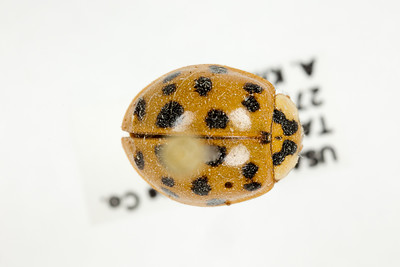
Multicolored Asian Ladybeetle: Rumors and Truths

Ladybeetles are considered beneficials for the pest control they provide in home gardens and a variety of crops. However, this week a story is making the rounds on the internet about a dog possibly being poisoned by ladybeetles. Xandra Morris, (Extension Agent-IPM, Hill and McLennan County) dog owner AND entomologist, clears up this rumor in the post below. Thanks, Xandra!

From Hill County Ag and IPM:

Winter is here, and the multicolored Asian ladybeetles are making their presence known. They are an invasive insect in the US and several other countries, and are out-competing our native ladybug species, but they still provide excellent biological control and are considered in most agricultural and garden settings to be beneficial.

Photo by Pat Porter

Photo by Pat Porter

Identification Look for the 'M' shape on the carapace (back of the head). These beetles are aptly named; they can be any variety of colors from white to orange to deep red, and can have many different numbers of spots.
Rumors This picture is floating around the internet causing (understandable) alarm for pet owners. The dog pictured has multicolored Asian ladybeetles on the roof of it's mouth. Most likely the dog ate something with the beetles already on it, or slept with its mouth open and they found a nice warm place to overwinter. 

Multicolored Asian ladybeetles inside a dog's mouth. This is NOT dangerous!

Rest assured that this DOES NOT HARM the dog in any way, other than give it bad breath! The beetles are not burrowing or biting, and they can be simply scraped off with a finger. They are not poisonous if accidentally ingested. This is very likely a rare happenstance, it is not beetle behavior to seek out animal mouths to rest in.

The Truth: Is it a Pest? These ladybugs can bite, but the bite is not harmful and won't break the skin. More importantly, they can emit a foul-smelling yellow liquid that can stain fabrics. It is this chemical defense that elevates them to 'pest' status in homes, as well as vineyards, where their presence (due to their overwintering in grape clusters) has been found to alter the taste of wines. You can read more about this phenomenon here.

In their native habitat these ladybugs spend the winter huddled together on cliff faces. Here in America, where they were introduced in 1916 to control aphid pests, we don't have cliffs, we have houses. Cue the invasion! Fortunately, they do not cause any damage to carpets, wood, or other household items except for the occasional stain. 

What to Do If you've got ladybeetles where they don't belong, simply vacuum or sweep them up and toss outside or in the outdoor trash. Don't bother with chemical sprays or sticky traps, they aren't effective (traps) or necessary (pesticides) in this situation. Also, don't crush them or otherwise handle them, or you'll find out just how foul that liquid defense is. 

To prevent them from bothering you in the future, seal up cracks and crevices in your homes with caulk or weather stripping.

Monday, December 12, 2016

Local Transmission of Zika Likely in Texas

Just as the Zika outbreak in Florida has been declared effectively over, it is being reported that 4 new cases of Zika in Texas have been likely caused by local transmission. These cases are in South Texas in Cameron County where the first locally transmitted case was identified last month.

While there are currently no travel advisories, it never hurts to take precautions. Agrilife has some great information on mosquito control and what Texas need to know about Zika!

Friday, December 9, 2016

Sugarcane Aphid Damage Ratings and Nutritional Data

Dr. Pat Porter wrote a brief summary this morning on some of the work we did this summer on the nutritional value of sorghum damaged by sugarcane aphid. I've posted what he wrote below. You can find it at Texas Sugarcane Aphid News.

One of the questions as we end the season is what kind of effect does sugarcane aphid damage have on the nutritional quality of sorghum stalk that are used for stove. We conducted two experiments this season, and both were designed to look at leaf damage and its effect on grain yield. However, in conducted these experiments we ended up wth many plots with discreet levels of leaf damage, and The United Sorghum Checkoff Program asked us to harvest stalk from the various plots and send them for nutritional analysis.

To be clear, the results that appear below are for grain sorghum, not forage sorghum. One experiment was conducted at the Lubbock Research and Extension Center using a sugarcane aphid-susceptible hybrid grown under moderate furrow irrigation, and the other was conducted at the Helms Farm near the Halfway Experiment Station. This experiment was conducted on a sugarcane aphid resistant hybrid grown under drip irrigation that supplied relatively more water than was available at Lubbock. Data from the two trials showed very similar trends, so they were combined to generate the following charts.

The Leaf Damage Rating System developed by Blayne reed goes from 0 to 10, with 1 being very little damage on the lower leaves, to 10 being all the leaves on the plant with observable damage. Sugarcane aphid damages the lower leaves first and then moves up the plant, so a leaf damage rating of 5 would suggest the leaves in the lower 50% of the canopy are damaged.

Each dot on a graph represents at least 4 stalks harvested from a plot at a given leaf damage rating. The nutritional analyses were performed at Servi-Tech Labs in Amarillo. A sample report from Servi-Tech is here.


Figure 1. There was a highly significant decrease in Total Digestible Nutrients with increasing levels of leaf damage.


Figure 2. Crude Protein was not significantly different between plots with different levels of leaf damage. 


Figure 3. There was a highly significant increase in Acid Detergent Fiber (non-digestible components) with increasing levels of leaf damage.


Figure 4. There was a highly significant decrease in Digestible Energy with increasing levels of leaf damage.


Figure 5. There was a highly significant decrease in Metabolic Energy, Beef with increasing levels of leaf damage.


Figure 6. There was a highly significant decrease in Net Energy, Lactating with increasing levels of leaf damage.


Thursday, December 8, 2016

2 More Days to Vote on the Grain Indemnity Fund!

Today and tomorrow are the last days to vote on the Grain Indemnity Fund at your local Texas A&M Agrilife Extension Office!

Call the Lubbock Co Extension office at 806-775-1740 if you have any questions.


**I am currently evaluating the performance of this blog and would appreciate it if you could fill out this short survey. Thanks!

Monday, December 5, 2016

Grain Indemnity Fund Referendum - Vote THIS WEEK

There is a referendum by the Texas Grain Producers Indemnity Board (TGPIB) for eligible Texas producers of corn, sorghum, soybeans, and/or wheat, including grain sold for seed, to decide if a refundable assessment should be collected. Any producer that has sold grain since 2013 is eligible to vote.

How does it work? From the TDA website: 
If the referendum is approved, collection of the assessment at the set rate will begin on February 1, 2017, and continue until such time as the TGPIB notifies grain buyers to cease collection. Each grain buyer or grain elevator, including a purchaser, warehouseman, processor or commercial handler who buys grain from or stores unsold grain for a producer, shall collect the assessment by deducting the applicable percentage from the final sales price of the grain or from any funds advanced for that purpose. Producers who suffer losses as a result of the financial failure of a grain buyer can make a claim to the fund.

How do you vote? 
Voting takes place December 5-9 at Texas A&M Agrilife Extension county offices. Find your nearest Agrilife Extension office here!

 More information is available from the TGPIB website.